An AI front desk for barbers that books clients by text and helps every barber get found, reviewed and booked again. Designed, built, and operated by Tradewind.
Fullchair is our product, not client work. We show it here because it is our approach facing the public: people who are not at a screen, customers who expect a reply in minutes, and AI that has to sound like the shop, not like software.
Hey! Marco has 11:15 or 11:45 on Saturday. Want me to lock one in?
11:15
Locked in: fade with Marco, Saturday 11:15. Text here if anything changes.
The client’s phone
3:30 cancelledOffered to regulars who are due. Filled.
Marco’s ChairM
Marco · Saturday
TodayAdd booking
DayWeekMonth
AI handled 14 messages. None need you.
Booked today9
Refilled1
10:00
Skin fadeAndre
11:15
FadeJay
Booked by text
12:30
Beard trimLuis
3:30
HaircutChris
Refilled
The barber’s phone
Illustrative
The situation
Cutting hair. Answering texts.
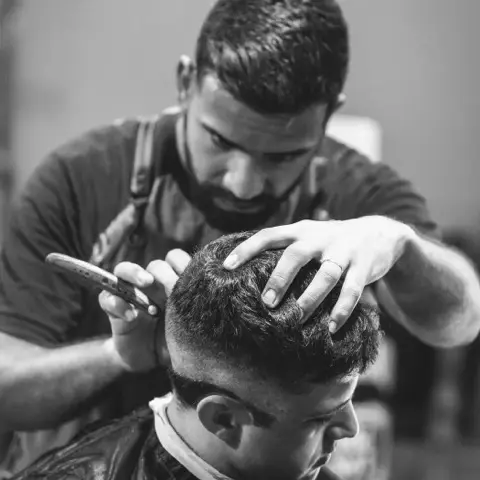
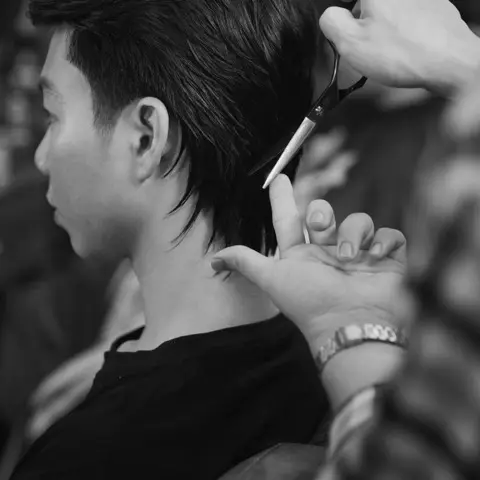
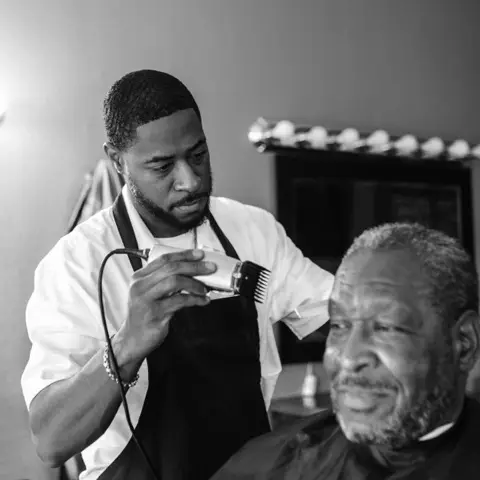
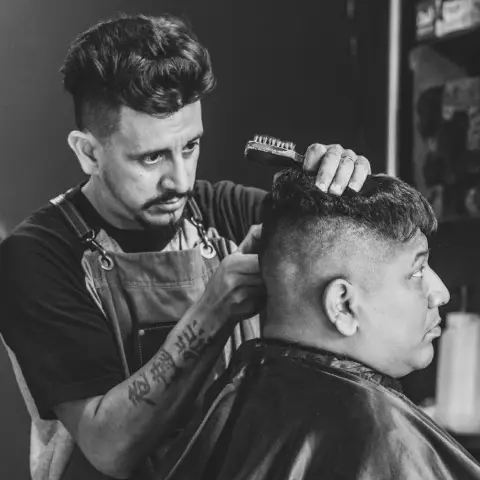
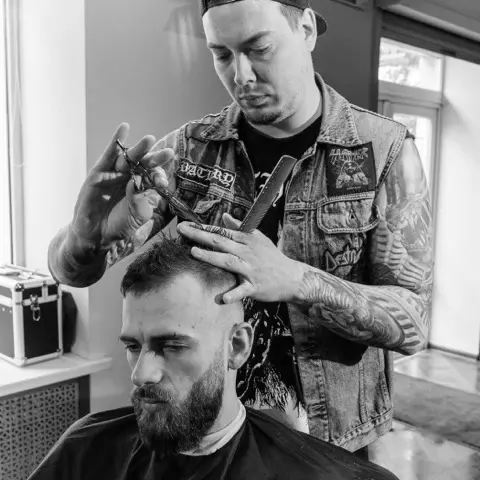
Most barbers are their own front desk. Bookings arrive by text, direct message and phone call, often while they are mid-cut with clippers in hand. A message that waits an hour can become a client who books somewhere else, and a late cancel becomes an empty chair nobody had time to fill.
Booking apps ask clients to download something and make an account. Many regulars would rather just text their barber, and many of them write in Spanish. The tools were built around the software, not around the chair.
The design principle
The barber cuts. The desk runs itself.
Every design decision followed from one rule: take work off the barber, never add to it. The routine runs on its own, the calendar stays in the barber’s hands, and only the unusual reaches them.
Getting booked.
More than a front desk. A way to get found.
Answering the clients a barber already has is half the job. Fullchair also gives every barber the tools to bring in the next one, and every piece feeds the same book.
Page→Booked→Cut→Review→Found↺
01
A page of their own.
Every barber gets a free page: real cuts, the menu, the next open times, and verified reviews. It goes in the Instagram bio, in DMs, anywhere a client might look, and it books straight into the real schedule. Clients never pay a booking fee.
Marco’s Chair · Miami
Marco
★★★★★ 4.9 · 38 verified reviews
Next open
Today 3:30Today 4:15Tue 10:00
Book onlineText to book
Real cuts
Menu
Skin fade45 min
Haircut30 min
Beard trim15 min
The barber’s page
Link in bioInstagram, DMs, Google
02
A QR on the mirror.
The app prints the signs. One opens the barber’s page. One opens a text or WhatsApp with the shop’s code already filled in, so the client just hits send. One lets a walk-in see the next open time and check in, without the barber stopping the cut.
Book with MarcoPick a cut and a time
Text to bookOpens a text or WhatsApp, shop code filled in
Walked in?Scan to check in with Marco. No app needed.
03
Every cut asks for a review.
Two hours after a cut is marked done, the client gets a short message by text or WhatsApp, in their language. One tap opens the review page: stars, a line, up to three photos of the cut. Every client is asked, not just the happy ones.
F
FullchairText or WhatsApp
Thanks for coming in to see Marco, Jay. How was your cut? Leave a quick review: app.fullchair.ai/r/…
How was your cut?Fade with Marco
★★★★★
Clean fade, right on time.
+ Add up to 3 photos
Send review
Two hours after the cut
04
Reviews that sell the next cut.
Reviews land on the barber’s page, marked as verified visits, and every one shows, good or bad. The page is open to Google and AI assistants, so a barber with a full book of honest reviews is the one people find next.
★★★★★Verified visit
“Clean fade, right on time. Booked by text in a minute.”
Jay R. · Fade with Marco
★★★★★Verified visit
“Great cut. Waited a few minutes past my time.”
Luis M. · Haircut with Marco
barber near me, skin fade
Marco · Marco’s Chair★★★★★ 4.9 · Book online or by text
What we built.
Always answering. Never in the way.
01
Booking by text.
Clients text one number, usually by scanning their barber’s QR code or tapping a link. Fullchair books them on the barber’s real hours, in English or Spanish. No app to download and no account to create: the phone number is the account.
02
One schedule, checked every time.
The AI never writes to the calendar directly. Every booking, move and cancel goes through one schedule that checks hours, breaks, time off and existing appointments first.
03
Cancellations become cuts.
When a client cancels, the open slot is offered to regulars who are due for a cut. The first yes gets the chair. Nobody has to text around.
04
Regulars, back on time.
Fullchair learns each client’s real cut cycle and reaches out when they are due, with their usual day and time.
05
Every client, from day one.
Barbers bring their client list and visit history from the app they used before, from almost any export. The first day on Fullchair already knows the regulars.
06
Sounds like the shop.
Each barber picks the tone, from chill to polished, and the house rules it repeats word for word. It never makes up a rule of its own.
Live in one sitting.
Set up on the barber’s own phone.
No number to buy or port, no hardware, no training. A few minutes and four screens, and the front desk is answering.
Fullchair
Your price list
Skin fade, 45 min Haircut, 30 min Beard trim, 15 min
Photo of the board
Found 3 services.
01
Bring the book.
Paste the price list or snap the board. The client list comes across from the old app.
Fullchair
Tell us your week
Tuesday to Saturday 10 to 7, lunch 2 to 2:30
Monoff
Tue10a to 7p
Wed10a to 7p
Thu10a to 7p
Fri10a to 7p
Sat10a to 7p
Sunoff
02
Say the week.
Type it or say it out loud, the way a barber would. The chart shows it back to fix.
Fullchair
Tone
Chill“yo, Sat 5:30 works. want it?”
Friendly“Hey! Sat 5:30 is open. Want me to lock it in?”
Polished“Saturday at 5:30 is available. Shall I book it for you?”
EnglishSpanishHaitian CreolePortuguese
03
Pick the voice.
Choose how the front desk sounds, the languages it answers in, and the house rules it repeats word for word.
Fullchair
You’re live. Clients can book you now.
Your pageQR sign for the stationText for your clients
Open my book
04
Go live.
The same day. A page for Instagram, a QR sign for the mirror, and a text to send regulars.
For the trade
What a big shop has. For every chair.
A large shop can pay someone to answer the phone. An independent barber renting a booth cannot. Fullchair gives every chair a front desk that never stops answering, speaks the client’s language, and fills the gaps a cancellation leaves, while the client relationship stays with the barber, wherever they cut.
A day at the chair.
Everything it handles between cuts.
8:00 AM
Reminded, not forgotten.
Clients booked today get a reminder by text or WhatsApp, and can reply to move it instead of just not showing up.
See you at 11:15 with Marco
9:40 AM
Paid before they sit.
A client who has missed before is asked to pay ahead. Each barber decides who pays ahead, and whether it is the full price or a deposit.
Paid ahead · Fade
11:05 AM
“On my way.”
In the 30 minutes before a cut, clients can share when they will arrive. Running late? They are offered the next open slot instead of a rushed cut.
On my way · 6 min
1:30 PM
En español, también.
A client writes in Spanish and gets answered in Spanish. Same booking, same schedule, same rules.
¿Tienes algo el jueves?
3:45 PM
Move or keep, the barber’s call.
A client asks to move a cut at the last minute. Each barber chooses how that goes: check with them first, handle it automatically, or hold the slot.
Move to 4:15?MoveKeep
9:10 PM
The phone still answers.
After hours, a voice assistant picks up, greets regulars by name, and takes a message or passes a vetted call to a person. It always says it is an assistant.
Message taken · Transcript saved
Times and names are illustrative. Clients are kept per shop, never mass-texted, and can reply STOP at any time. Fullchair launched with founding barbers in Miami in November 2026.
Your business.
The same approach, built around your customers.
A busy professional, customers who expect an answer now, and work that should not wait for someone to be free. If that sounds like your business, we should talk.